The Head of the Department
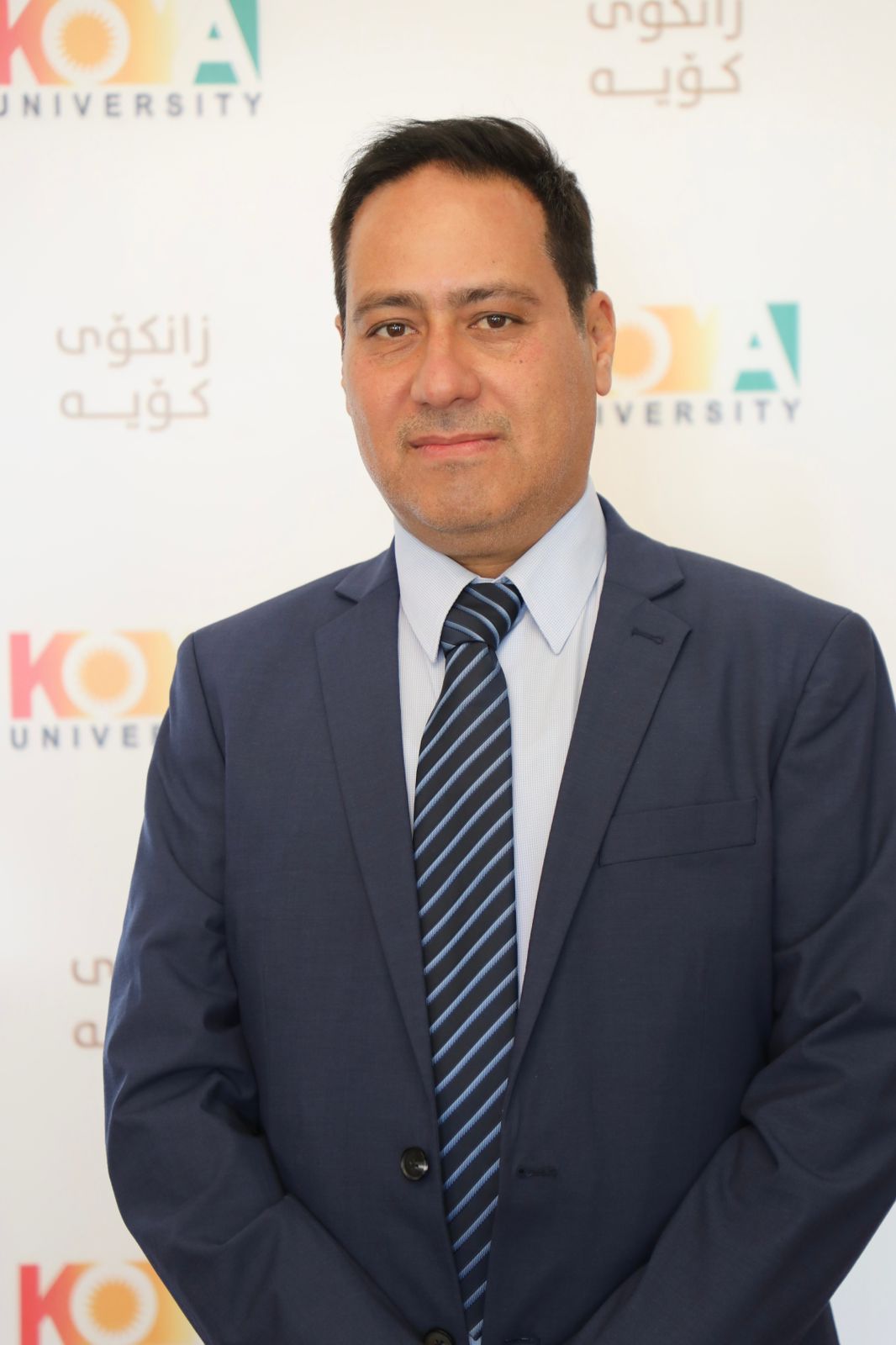
Dr. Hayder Hassan Abbas obtained his Ph.D. in Control Engineering from the University of Kurdistan, Iran, in 2024. He received M.Sc. in Electronic Engineering and Artificial Intelligence from Near East University, Cyprus, in 2013. He earned a Postgraduate Diploma (P.G.D.) in Planning (Energy Planning) from the University of Duhok, Kurdistan Region of Iraq, in 2009, and B.Sc. in Electrical and Electronic Engineering from the University of Baghdad, Iraq, in 2003. Dr. Hayder has worked as a researcher at several international research centers. He served as an Assistant Researcher at the Intelligent Systems Research Center (ISRC), Near East University, from 2011. In 2014, he joined the Center of Innovation for Artificial Intelligence (CiAI) at the British University in Nicosia, contributing to research in human brain modeling and artificial neural network–based prediction. He became a member of the European Center for Research and Academic Affairs (ECRAA) in 2015. Since 2020, he has been a researcher at the Smart Grid Research Center (SMGRC), Currently, he is a Lecturer and Head of the Research Park at Koya University. His research interests include AI, power electronics, advanced control techniques (robust control, model predictive control, and intelligent dynamic control), and solar PV planning and design, and solar energy systems planning.
Vision of Department
The Research Park Department (DORP) at Koya University, operating under the Deanship of Research and Development, is dedicated to applied and interdisciplinary research in support of the University’s vision as a Green University. The Department emphasizes sustainable and environmentally responsible technologies, with a particular focus on renewable energy systems, clean energy initiatives, and green engineering solutions. Furthermore, the Research Park fosters collaboration between academia and industry to develop practical responses to environmental and socioeconomic challenges, promote innovation and technology transfer, and contribute to sustainable development at the local, regional, and international levels.
Objective of Department
The Research Park Department aims to serve as a collaborative platform linking academia, industry, and government to advance innovative research and development in green technologies, renewable energy, and sustainable engineering solutions. Through practical and applied research, the Department addresses environmental and energy challenges that contribute to sustainable socioeconomic development.
The Department strengthens the academic–industrial interface by collaborating with regional and international industrial partners on clean energy and sustainability projects, while supporting technology transfer, innovation, and commercialization of research outcomes inside and outside the University. These efforts enhance the research culture and national and international visibility of Koya University in sustainability and clean energy research.
Present Activities of Department
The Research Park Department (DORP) is actively engaged in several key practical and research-oriented projects aligned with Koya University’s Green University objectives. Among its major initiatives is the development and manufacturing of LiFePO₄ batteries for solar energy storage systems, alongside preparations to establish a startup company in this field. The Department also provides technical supervision and support for the design and implementation of solar power systems across Koya University campuses, which are currently ongoing projects aimed at enhancing renewable energy utilization.
Another flagship initiative involves the digitization and integration of the University’s weather station data with internationally recognized data platforms, thereby contributing valuable resources to climate change and environmental research. In addition, DORP is leading efforts to transition the University’s conventional power grid into a smart microgrid, reflecting global trends in future power system development.
Furthermore, the Department collaborates with local non-governmental organizations (NGOs) and governmental bodies to study and analyze critical regional issues, including ongoing research on electromagnetic pollution in Koya City. These activities support evidence-based decision-making and promote sustainable development within the region.
Le développement continu de novajackpot casino traduit l’engagement de l’équipe envers ses utilisateurs. Le moteur de recherche interne retrouve un titre en quelques caractères seulement. Le casino en direct propose des tables de roulette, blackjack et baccarat animées par des croupiers professionnels. Les frais sur les opérations financières sont nuls ou réduits selon le mode choisi. Les générateurs de nombres aléatoires sont audités par des organismes indépendants reconnus. L’assistance francophone est disponible 24 heures sur 24 par chat en direct. Les évolutions techniques régulières témoignent d’un investissement continu dans la qualité. Les tours gratuits offerts à l’inscription permettent de découvrir les machines vedettes sans risque. L’authentification biométrique simplifie la connexion depuis les téléphones compatibles. Les game shows en direct comme les jeux de roue géante créent une atmosphère unique. Le mode sombre reposant pour les yeux convient particulièrement aux sessions prolongées. Les machines à sous représentent l’essentiel de l’offre, avec des milliers de variantes thématiques. Les opérations en euros se déroulent sans frais de change ni surcoût caché. La plateforme publie régulièrement des rapports de transparence sur les taux de redistribution de ses jeux. Le support technique est compétent et résout efficacement les éventuels problèmes rencontrés. Les guides stratégiques mis à disposition aident les joueurs à optimiser leurs sessions. Les bonus sans condition de mise sont proposés ponctuellement, offrant une liberté totale aux joueurs. Les volumes de données utilisés sont optimisés pour ne pas peser sur les forfaits limités. Les fondamentaux sont respectés et même renforcés par des touches modernes bienvenues. Les amateurs de divertissement digital y trouvent un espace cohérent et stimulant.
L’expérience offerte par l8 casino se révèle progressivement à travers une interface fluide et bien pensée. Le programme VIP comprend plusieurs paliers progressifs avec des avantages cumulables. Le système de paiement sécurisé accepte les transactions via cartes bancaires et portefeuilles numériques. Les listes de favoris simplifient le retour vers les jeux préférés sans recherche supplémentaire. La licence détenue par la plateforme garantit le respect des règles internationales applicables. Les variantes régionales de roulette et de blackjack complètent une sélection déjà très riche. Les tickets envoyés par e-mail reçoivent une réponse circonstanciée dans des délais courts. Le mode portrait comme le mode paysage sont parfaitement supportés pour le confort visuel. Les flux vidéo en haute définition garantissent une qualité d’image irréprochable. Le moteur de recherche interne retrouve un titre en quelques caractères seulement. Les promotions transversales associent casino classique et live pour multiplier les opportunités. Les opérations en euros se déroulent sans frais de change ni surcoût caché. Les classements en temps réel permettent de suivre la progression dans chaque compétition. Les générateurs de nombres aléatoires sont audités par des organismes indépendants reconnus. Les filtres de recherche permettent de trier les jeux par fournisseur, popularité ou taux de redistribution. L’assistance francophone est disponible 24 heures sur 24 par chat en direct. L’expérience nomade est aussi complète que la version bureau, sans aucune fonctionnalité retirée. Les tables de blackjack live respectent strictement les règles internationales reconnues. Les amateurs de divertissement digital y trouvent un espace cohérent et stimulant. L’ensemble des retours utilisateurs converge vers un même constat : l’expérience est à la hauteur des promesses.